
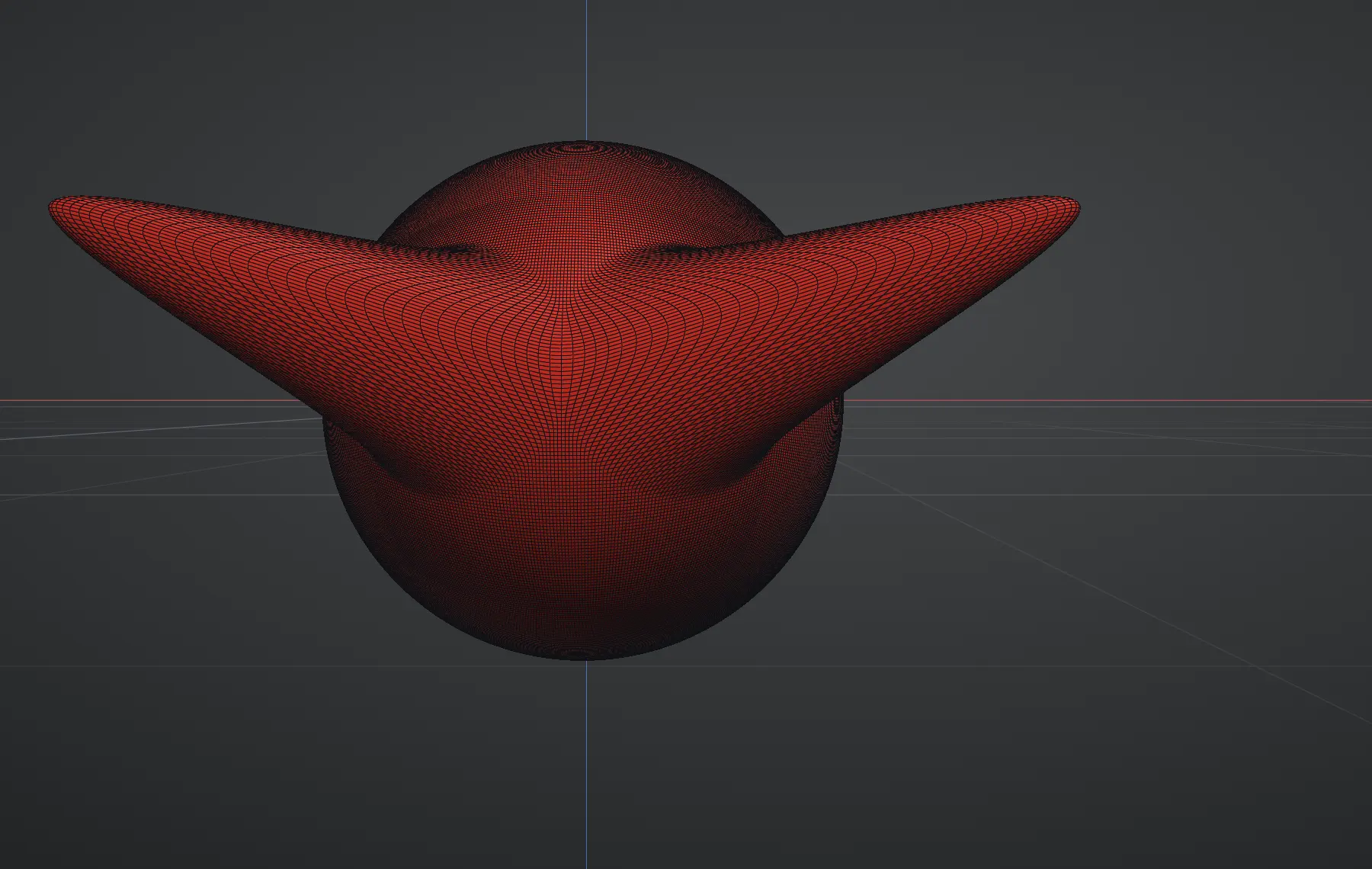
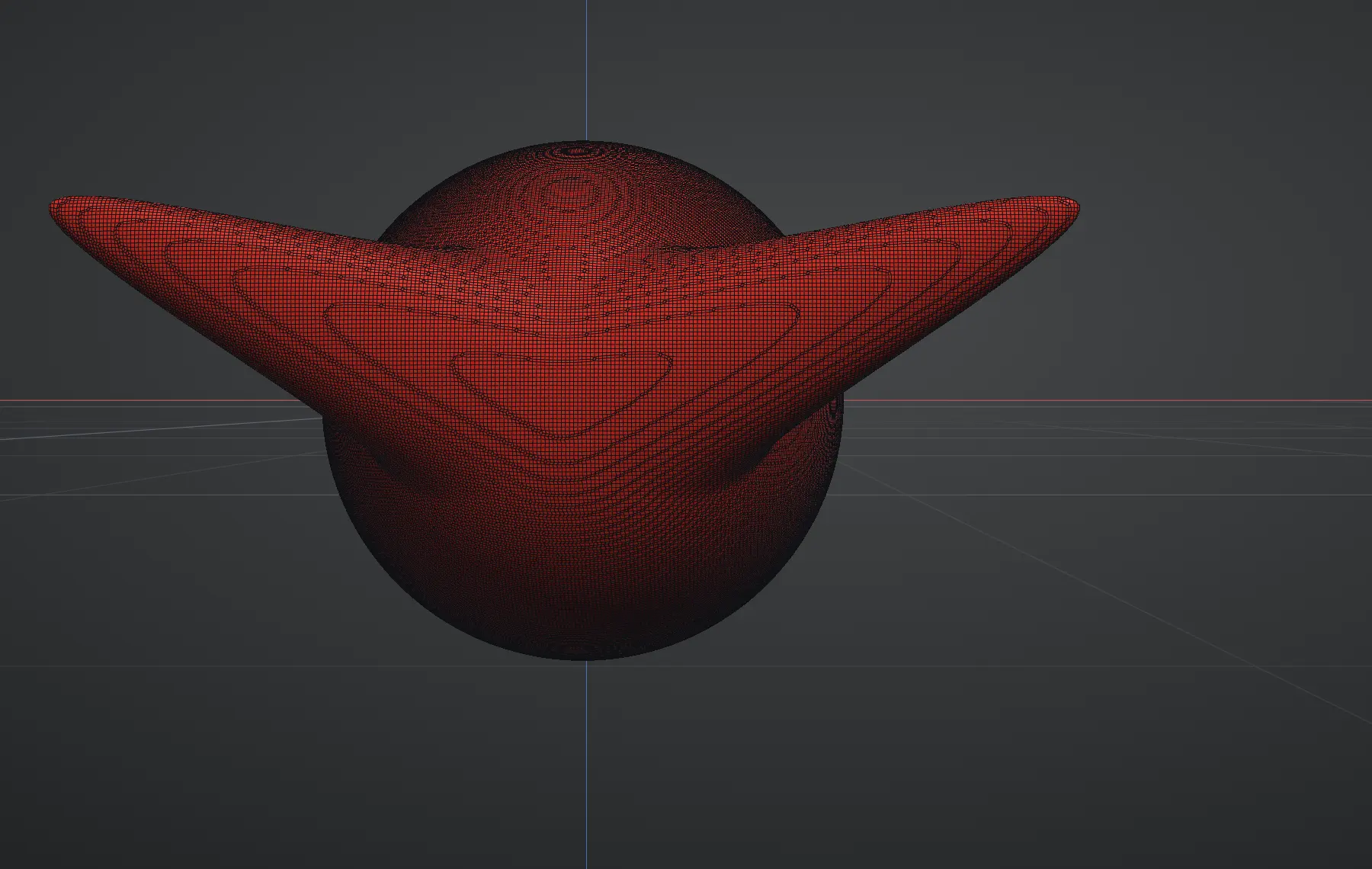
Sculpting deforms triangles. Pull far enough with Grab, inflate hard enough, move enough mass, and parts of the mesh end up starved of geometry — long stretched triangles that make brushes feel uneven and detail impossible. Remesh fixes it by rebuilding the whole surface with fresh, evenly-sized quads that follow the current shape.
Using it
Both controls live in the Topology section:
- Resolution — the density of the rebuilt surface, from 32 to 512. Higher rebuilds from more, smaller quads: more faithful to fine detail, more triangles. The default of 256 suits most mid-sculpt cleanups.
- Remesh ⬡ — one click rebuilds the active layer's surface.
The shape stays; the wiring underneath is replaced. Because the new mesh is a fresh surface, the sculpt's shape is what survives — detail finer than the chosen resolution is absorbed, so remesh at a resolution that matches the detail you want to keep. Undo restores the previous mesh if the result isn't what you wanted.
When to reach for it
- After big proportion moves — long Grab pulls, hard inflates, limb-scale rearrangement.
- When brushes start behaving unevenly — same stroke, different response in different areas — that's stretched topology talking.
- After merging layers — merged pieces remesh into one continuous solid: the intersections between parts become real surface. Merge all then Remesh is the standard way to turn a multi-part assembly into a single sculptable body — and the way to prepare one for 3D printing.
- Before a detail pass — clean, even topology takes fine detail predictably.
Remesh and Subdivide are partners, not rivals: Remesh sets the flow of the mesh, Subdivide raises its density. A common rhythm is block → remesh → subdivide → detail.
Note that remeshing replaces the topology outright, so surface data tied to the old vertices goes with it: the mask is cleared, and painted colour doesn't carry across. Settle the topology first, paint after.